All your coding agents.
One desk.
See what each agent is doing, what it changed, and what its plan has left.
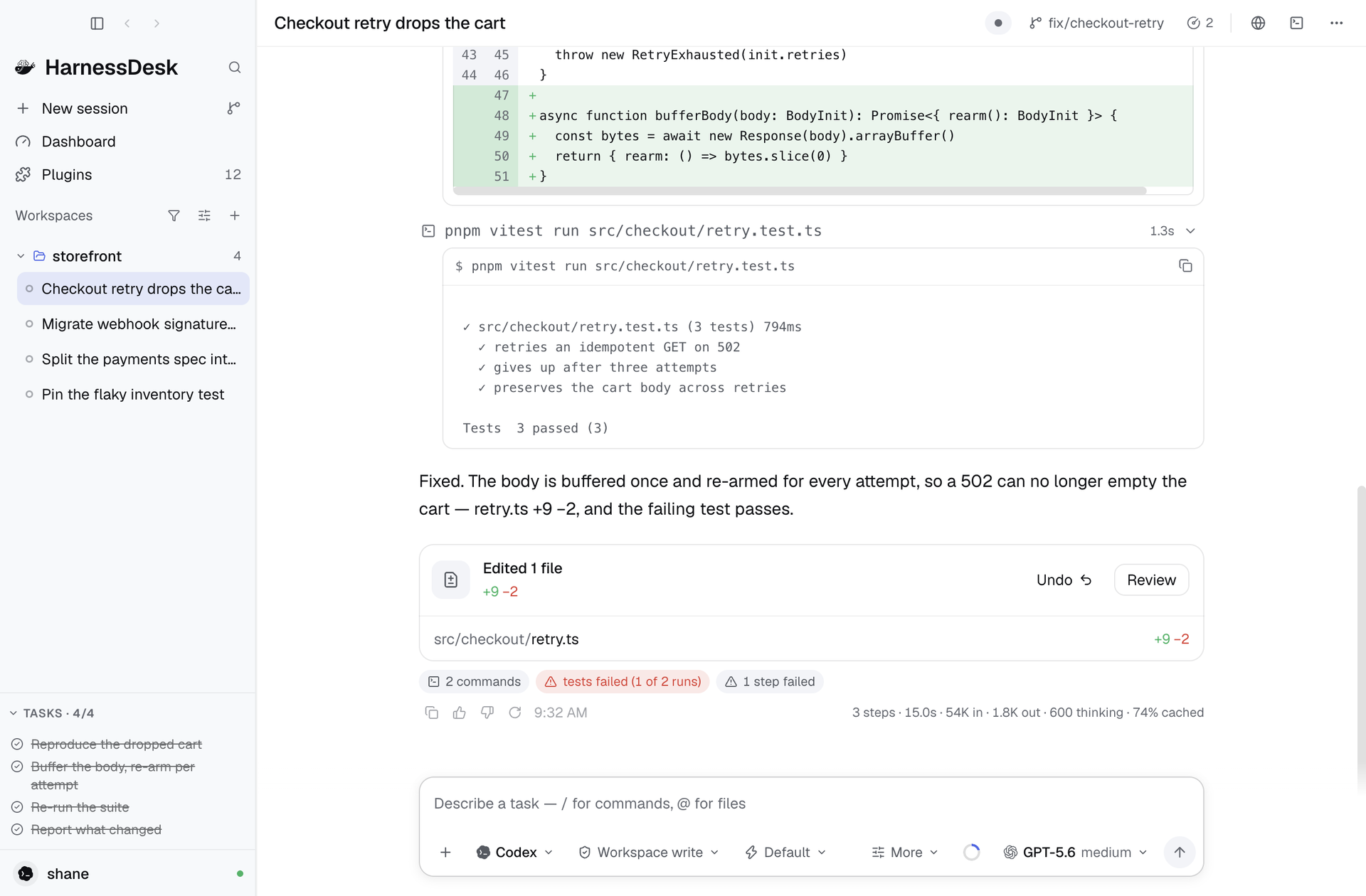
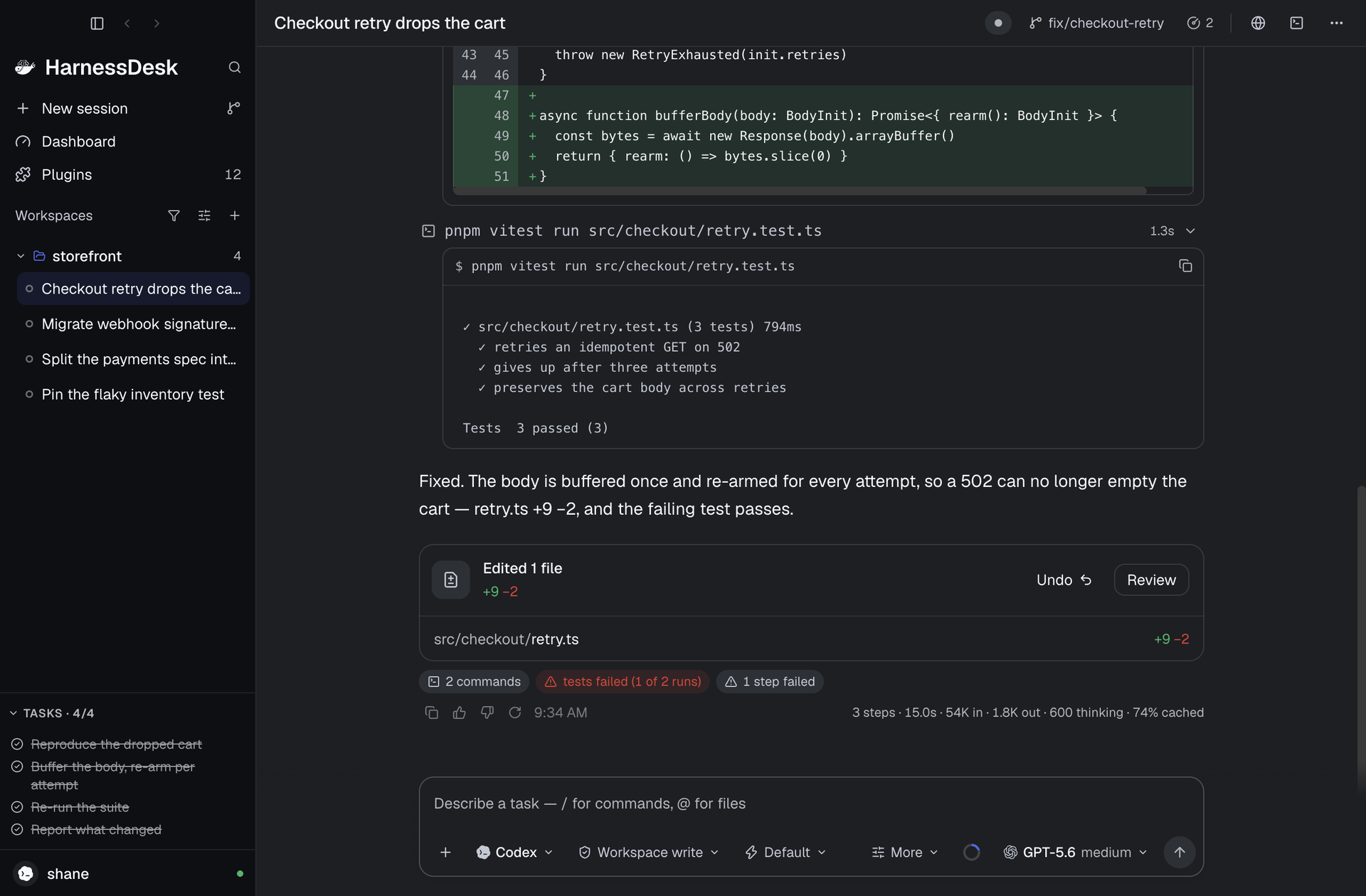 HarnessDesk is a desktop app. This is a still.
See what each agent is doing, what it changed, and what its plan has left.
HarnessDesk is a desktop app. This is a still.
Codex runs natively. Claude Code and Cursor go over verified bridges. Everything else here speaks ACP, and any other ACP agent is one JSON entry.
What each plan has left, when it refills, and what the work cost at public rates. Read from each agent’s own cache on your machine, so nothing is sent anywhere.
The dashboard beside this is the real one. Pivot the ledger by agent, model, or project, and narrow it to a single account. The numbers are staged for this page; the surface is not.
When the work splits, the agents share a board. A job is claimed by whichever agent takes it, never handed out. A claim owns its files, and a claim that overlaps a live one is refused.
Referee it beside this: move a card, mark one done, add a job from the top row. Watch job #1 land and see the job waiting on it open by itself, with Codex’s notes still on the card.On the desktop: Codex finishes the retry fix, the job waiting on it opens by itself with Codex’s notes on the card, and Claude takes what opened.
Instead of retyping everything somewhere else, the desk packs the goal, the changed files, and the branch into a hand-off, then stages it in the agent you choose. Below, Codex has just finished the checkout fix and the hand-off dialog is already open. Pick what travels, press the button, then Send, and Claude picks the work up with the context attached.
HarnessDesk is a desktop app. This is a still.
The developer preview is a small group who already run two or more coding agents and are willing to say what breaks. That is the whole application.
On an Intel Mac? Take this build instead, or check the checksums first.